Weight Loss During Juice Fasts and Cleanses
Understanding the composition of rapid weight loss from caloric restriction
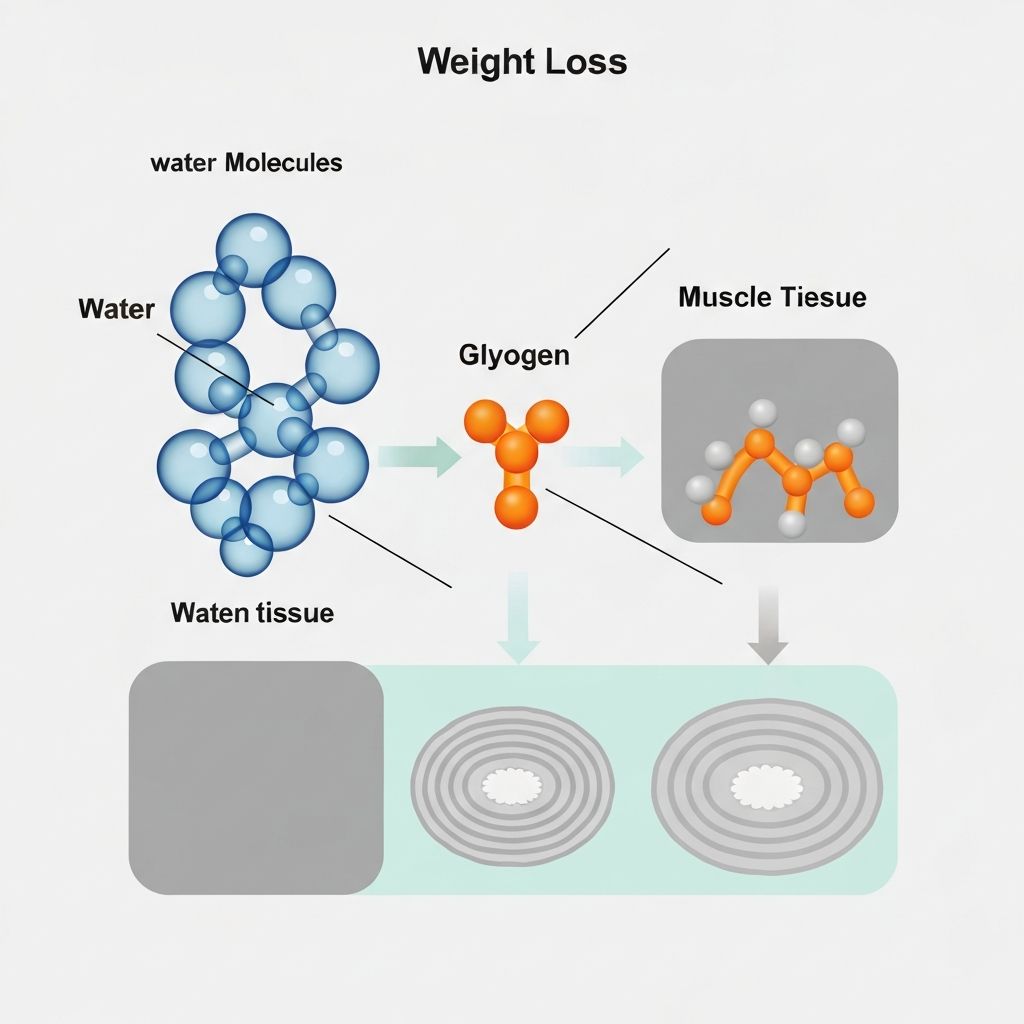
Introduction to Rapid Weight Loss Mechanisms
Juice fasts, extended fasting protocols, and severe caloric restriction produce rapid weight loss. Many promoters attribute this weight reduction to "toxin elimination" or "cleansing." However, scientific analysis of weight composition changes reveals that weight loss during fasting follows predictable biochemical patterns identical to weight loss from any caloric deficit.
Water Weight and Glycogen Depletion
The most rapid weight loss during fasting occurs in the first 3-5 days and consists primarily of water and depleted glycogen stores. This is responsible for 50-60% of total weight loss in short-term fasting protocols.
Glycogen Storage and Mobilization
The body stores approximately 300-500 grams of glycogen distributed between liver (100-120 grams) and skeletal muscle (400-500 grams). Each gram of glycogen is stored with approximately 3 grams of water as part of the glycogen molecule and surrounding cellular environment. When dietary carbohydrate is restricted, glycogen stores are rapidly mobilized for energy. As glycogen depletes, the associated water is released and excreted, producing dramatic initial weight loss.
Water Loss Kinetics
The 3-4 gram water-to-glycogen ratio explains the rapid weight loss of 1-2 kilograms in the first few days of fasting. This weight loss is not representative of fat loss or "toxin elimination"—it is simply the rehydration state normalizing as glycogen depletes. Upon resuming normal carbohydrate intake, glycogen is rapidly repleted with associated water, and weight returns to near baseline within days.
Lean Muscle Mass Loss
Extended fasting induces proteolysis—breakdown of muscle protein for gluconeogenesis. This accounts for 20-30% of weight loss in short-term fasting protocols. Lean mass loss occurs because the body requires glucose for certain tissues (red blood cells, immune cells, portions of the central nervous system). Without dietary carbohydrate, amino acids from muscle protein are converted to glucose through hepatic and renal gluconeogenesis.
Protein Degradation During Fasting
Fasting triggers increased proteolysis, primarily affecting peripheral skeletal muscle. This proteolysis is not selective for "toxic" or non-essential muscle. Rather, all muscle groups are affected proportionally. Lean mass loss occurs whether fasting is 3 days or 30 days. The rate of muscle loss increases with duration of fasting and varies with nutritional status, hormonal factors, and physical activity.
Irreversibility of Lean Mass Loss
Unlike water weight that returns upon rehydration, lean muscle mass loss cannot be fully recovered without prolonged resistance training and adequate protein intake. Fasting-induced muscle loss represents a metabolic cost that is often underestimated in cleanse protocols.
Adipose Tissue (Fat) Loss
True fat loss during fasting occurs more slowly than water or muscle loss, typically representing only 10-20% of total weight reduction in short-term protocols (less than 2 weeks). Fat oxidation is limited by physiological factors including the requirement for continuous glucose production.
Metabolic Rate During Fasting
Prolonged fasting reduces metabolic rate through multiple mechanisms including thyroid hormone reduction, decreased sympathetic nervous system activity, and reduced protein synthesis. This metabolic adaptation, called the "metabolic adaptation" or "adaptive thermogenesis," represents an evolutionary survival mechanism. It reduces the caloric deficit below predictions, slowing fat loss.
Fat Loss Versus Total Weight Loss
Due to the predominance of water and muscle loss in early fasting, the proportion of fat loss is minimal despite high overall weight loss. A person losing 5 kilograms in a week of fasting might lose only 0.5-1 kilogram of actual fat, with the remainder from water and muscle.
Comparison With Balanced Weight Loss
In contrast, gradual weight loss from moderate caloric restriction combined with resistance training and adequate protein intake preserves lean mass and preferentially mobilizes adipose tissue. Over 12 weeks, losing 0.5 kilograms per week through a 500-calorie deficit results in 6 kilograms of weight loss with 80-90% from fat and minimal lean mass loss.
Protein Preservation
Adequate protein intake during caloric restriction (1.6-2.2 grams per kilogram body weight) preserves lean mass by reducing the body's reliance on muscle protein gluconeogenesis. This is not possible during juice fasts, which typically provide minimal protein.
The Absence of "Toxin Loss" Mechanisms
No biochemical mechanism specifically releases accumulated "toxins" through fasting. Weight loss occurs through:
- Glycogen mobilization with associated water loss
- Muscle protein degradation for gluconeogenesis
- Adipose tissue mobilization for energy production
- Fecal matter elimination from reduced intake
None of these mechanisms selectively eliminate "toxins." If toxic compounds were preferentially mobilized during fasting, they would accumulate systemically to higher concentrations, not lower ones.
Post-Fasting Weight Regain
Rapid weight regain following fasting protocols is virtually universal. Water weight returns within days upon carbohydrate repletion. This pattern repeats with each cleanse, producing a cycle of rapid loss and regain without sustainable benefit.
Health Implications
Rapid weight loss from fasting produces transient water weight loss and lean mass loss without preferential fat loss or toxin elimination. The lean mass loss represents a metabolic cost without compensatory health benefit.
Related Articles
Commercial Detox Products
Review clinical evidenceMucoid Plaque Debunked
Explore intestinal healthInformation Context
This educational content explains the composition of weight loss during fasting using biochemistry and physiology. It is provided for informational purposes only and does not constitute medical or nutritional advice. For weight management strategies, consult qualified healthcare professionals.